Second star to the right. Straight on till morning. And try not to think too hard about what you're leaving behind.
J.M. Barrie introduced Peter Pan in a 1902 novel, refined him in the 1904 stage play that became a sensation, and published the definitive text in 1911 — a story about a boy who refused to grow up, a girl who was ready to, and the island between them where both things were possible at once. Neverland is not simply an adventure setting. It is a psychological landscape: a place where children are free and pirates are the only grown-ups, where time stops and consequence is optional, and where the Lost Boys have found a version of family in the absence of the real thing. It is also, underneath all the pixie dust and crow-crowing, a story about loss — about what is gained by staying young and what is surrendered by it, and about the particular sadness of a boy who watches through the window at a life he cannot quite enter.
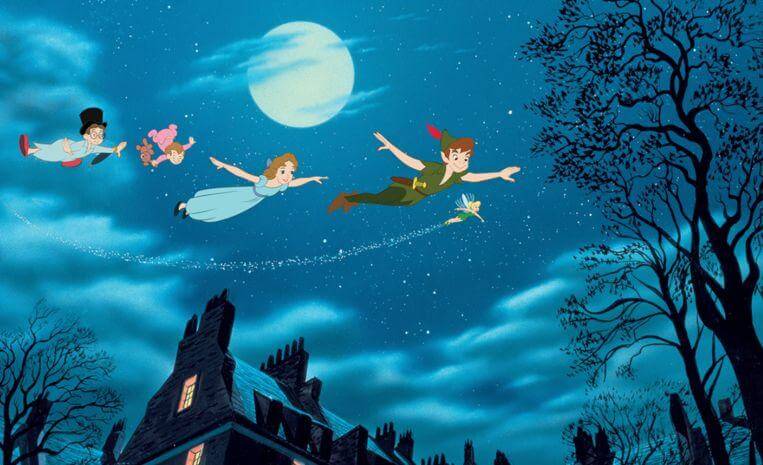
Disney's 1953 animated adaptation gave the story its most beloved visual form — Tinker Bell, the jealous and luminous; Captain Hook, theatrical and magnificent in his villainy; the crocodile and its ticking clock that is simply the best metaphor for mortality in children's film. Barrie's creation has since inspired musicals, sequels, reimaginings, live-action films and every version of the question: what would you give up, to never have to grow old?
Our Peter Pan collection brings together officially licensed figures, accessories, homeware and gifts — from Peter and Tinker Bell Funko Pops and collector's pieces to mugs, prints and keepsakes for fans of Neverland in all its forms. For dreamers, for adventurers, and for anyone who still, quietly, doesn't entirely want to grow up.
All you need is faith, trust, and a little pixie dust. We can help with at least one of those.